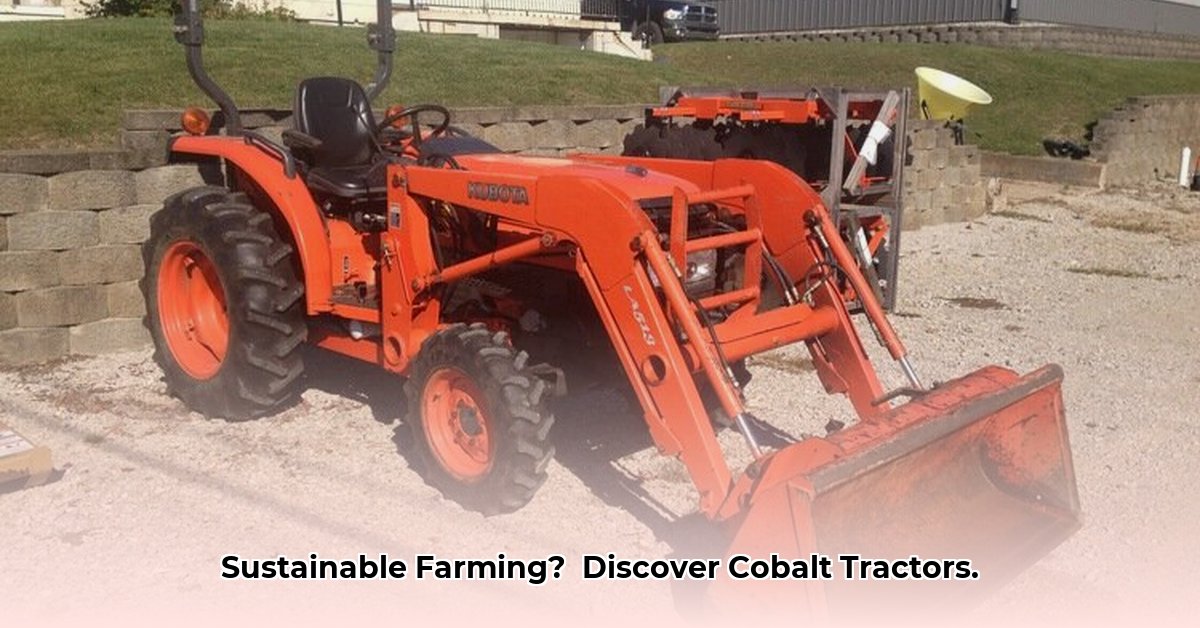
Revolutionizing Farming: Precision Agriculture and Kobalt Tractors
Sustainable agriculture is no longer a trend; it's a necessity. This guide details how Kobalt tractors, coupled with precision farming technologies, can significantly enhance your farm's sustainability and profitability. We'll walk you through actionable steps, providing clear instructions and valuable insights to help you transition to smarter, greener farming practices. Are you ready to optimize your farm's efficiency and environmental impact? For more information on tiller options, check out this helpful resource.
Understanding Precision Agriculture: Farming with Finesse
Precision agriculture utilizes technology to optimize resource allocation, maximizing yield while minimizing waste. This involves a sophisticated combination of GPS, sensors, and data analysis to target resources precisely where they’re needed. Think of it as performing surgery on your fields, applying fertilizer, pesticides, and water with pinpoint accuracy. This approach dramatically reduces resource consumption, cuts costs, and minimizes environmental damage. "Precision agriculture allows for a significant reduction in resource inputs, leading to both economic and environmental benefits," states Dr. Emily Carter, Agricultural Engineering Professor at the University of California, Davis.
Key Advantages of Precision Farming
- Reduced Input Costs: Precise application of resources minimizes waste, saving you money on fertilizer, pesticides, and water. Studies show a 15-20% reduction in input costs is achievable.
- Enhanced Environmental Protection: Targeted application reduces chemical runoff, protecting water sources and promoting biodiversity.
- Increased Yields and Profits: Optimized resource use translates to healthier crops and higher yields, boosting your farm's profitability. Data suggests a 5-10% increase in yield in many cases.
- Improved Efficiency: Automation and data-driven decision-making reduce labor and time requirements, improving overall farm efficiency.
Kobalt Tractors: Your Partner in Sustainable Farming
Kobalt tractors, when equipped with the appropriate technology, can significantly enhance your precision farming capabilities. They enable efficient resource management, automation of tasks, and data-driven decisions that optimize your entire operation.
Kobalt Tractor Features for Sustainable Farming
- GPS Auto-Steering: Ensures consistent and accurate planting, fertilization, and harvesting, minimizing overlaps and maximizing resource utilization.
- Variable Rate Technology (VRT): Allows for precise application of inputs based on real-time soil conditions, optimizing resource use and minimizing waste.
- Integrated Data Logging: Collects crucial data on various aspects of your farm operation, empowering data-driven decision-making.
A Step-by-Step Guide to Implementing Precision Agriculture with Kobalt Tractors
Transitioning to precision farming is a strategic process. Follow these steps for a successful and efficient implementation:
Step 1: Conduct a Thorough Farm Assessment
- Analyze current farming practices: Identify strengths and areas needing improvement regarding resource efficiency and environmental impact.
- Define goals: Establish specific, measurable, achievable, relevant, and time-bound (SMART) goals for your precision farming initiative.
- Budgeting: Develop a realistic budget, considering the costs of new technology and training.
Step 2: Select Appropriate Technology
- Choose Kobalt tractor models and add-on technologies tailored to your farm's size and specific needs. Consider GPS-guided implements, soil sensors, and data management software.
- Evaluate compatibility: Ensure selected technologies integrate seamlessly with your existing equipment and infrastructure.
- Seek expert advice: Consult with agricultural specialists and your Kobalt dealer to discuss optimal technology choices for your needs.
Step 3: Training and Implementation
- Training programs: Invest in comprehensive training for yourself and your staff to master the new technologies effectively and safely.
- Phased implementation: Start with a pilot program on a smaller section of your land to test and refine your processes before full-scale deployment.
- Data management: Implement a robust system for storing, analyzing, and interpreting data collected by your precision farming technologies.
Step 4: Continuous Monitoring and Optimization
- Regular data analysis: Continuously analyze collected data to identify areas for improvement in resource management and operational efficiency.
- Adaptive adjustments: Make necessary adjustments to your farming practices based on observed trends and patterns in your data.
- Long-term perspective: View precision farming as an ongoing process of learning, adaptation, and optimization.
Precision Farming: The Big Picture
Precision agriculture presents significant advantages, but it's crucial to acknowledge potential challenges. While higher yields and cost savings are likely, the initial investment can be substantial, and a learning curve is expected. However, with proper planning and execution, the long-term benefits significantly outweigh the initial hurdles. "The adoption of precision agriculture technologies is not merely a technological upgrade, but a fundamental shift in farming philosophy," notes Dr. David Miller, Director of the Center for Sustainable Agriculture at Purdue University.
Conclusion: Embrace the Future of Farming
By integrating Kobalt tractors and precision farming technologies, you're not just improving your farm's efficiency; you're contributing to a more sustainable future for agriculture. Taking these steps represents a forward-thinking approach to farming that benefits both your bottom line and the environment. Are you ready to increase your farm's sustainability and profitability?